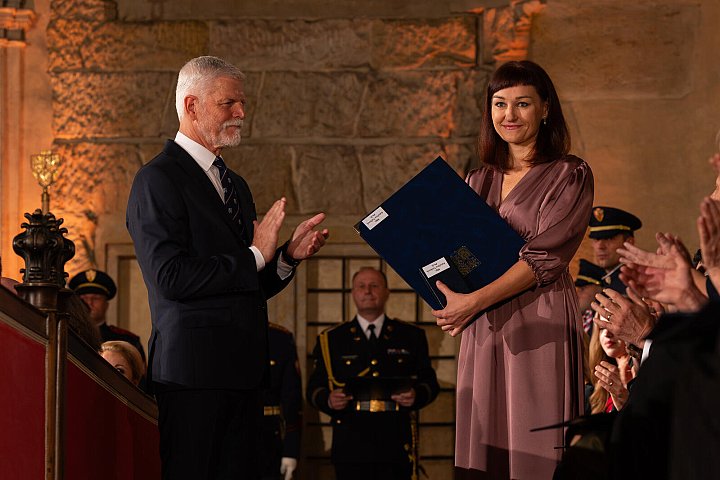
To mark the anniversary of the establishment of Czechoslovakia, President Petr Pavel presented state awards to a number of distinguished individuals. The recipients included one of our authors, Kateřina Tučková, who was awarded the Medal for Achievements in the Arts.
“It was a joy to receive the award from the President; I personally hold him in high regard for his foresight, his broad perspective, and his consistent commitment to the democratic values that have shaped our country since 1989 – values he continues to uphold even as the current government systematically tramples them underfoot through its actions. Receiving an award for my literary work was also a welcome boost, given that the Ministry of Culture is now taking a totally adversarial stance, with Minister Oto Klempíř treating artists like parasites leeching off the state budget; his incompetent interventions are destroying the cultural ecosystem and hindering the public’s access to vibrant, free-spirited art. Naturally, this situation within the cultural sphere – and, by extension, society at large – is deeply troubling to me," says writer Kateřina Tučková.
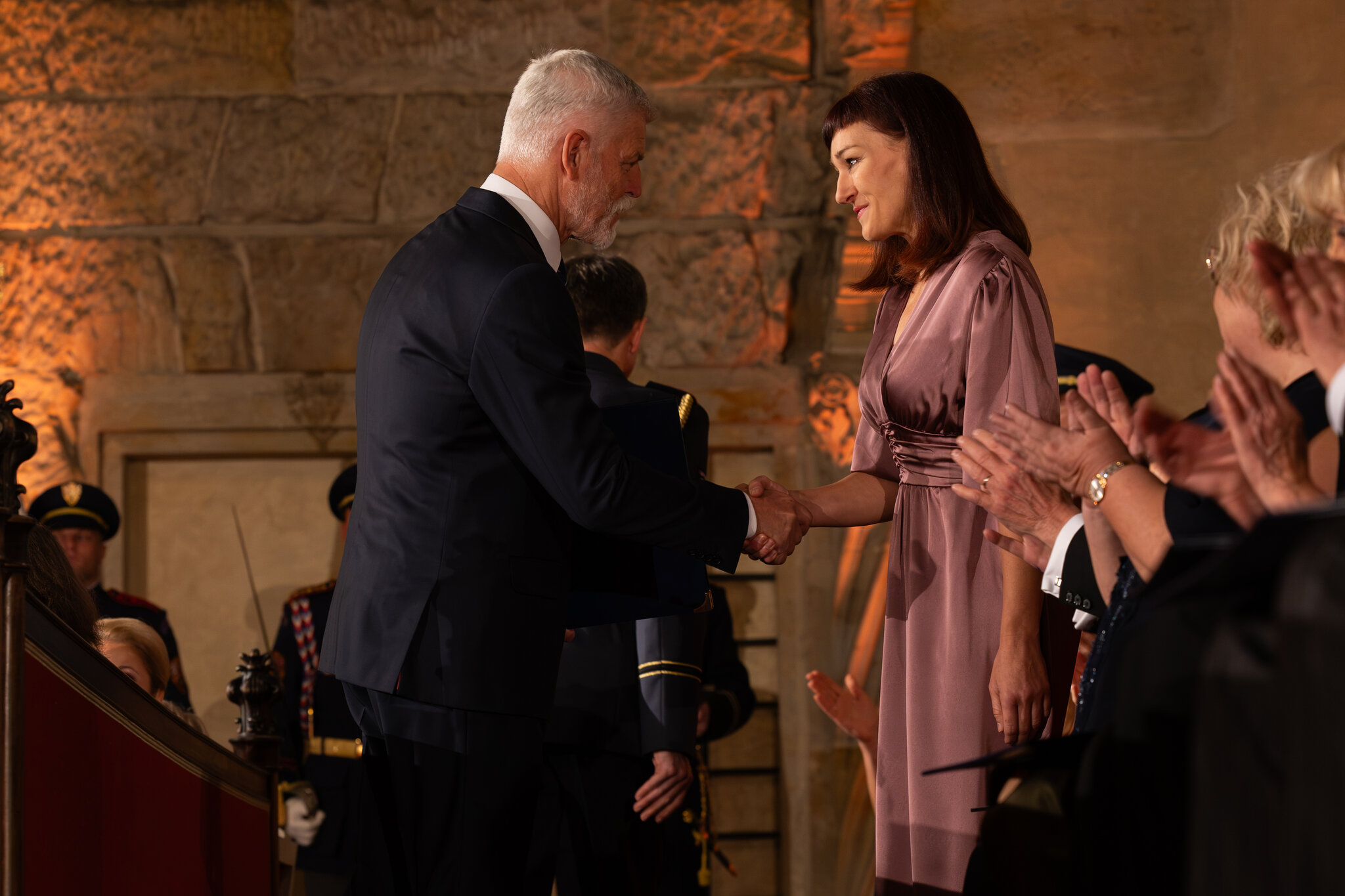
Photo + introductory photo: Office of the President of the Republic, ©Zuzana Bönisch, ©Tomáš Fongus
Within the space of just two weeks, Kateřina Tučková has thus received her second major award, as her novel Bílá Voda (published in Polish by Afera, translated by Julia Różewicz) won the Angelus Central European Literature Award in Poland, bringing the prize back to Czech literature after seventeen years. This marks only the second time in history that a Czech book has won the Angelus Award. Moreover, the author is the first Czech to have won both associated honours: the jury’s main prize and the Natalya Gorbanevskaya Readers’ Choice Award.
“I would like to thank the expert panel for the main Angelus Award and extend my heartfelt thanks to the Polish readers for the Natalya Gorbanevskaya Award. This particular award holds special significance for me – it bears the name of a great friend of our country who, in August 1968, could not turn a blind eye the Russian occupation of Czechoslovakia; through her protest, she sent us a life-affirming message. This highly symbolic award is not just a source of joy for me personally; it also serves as an important message for the Czech cultural community – it testifies to the fact that we are connected within Europe, that we see one another, and that we listen to each other. At a time when our cultural scene is being disrupted by the new State Cultural Policy – when the Minister of Culture threatens a ‘clean-up of the system’ and declares that support will only be given to apolitical art that aligns with the state’s current priorities – such a message is immensely important to us. We thank our Polish readers for seeing us, and for the hope that this connection will endure in the years to come – a period when voices from the Czech Republic will probably reach you far less frequently than they have in the past,” says Kateřina.
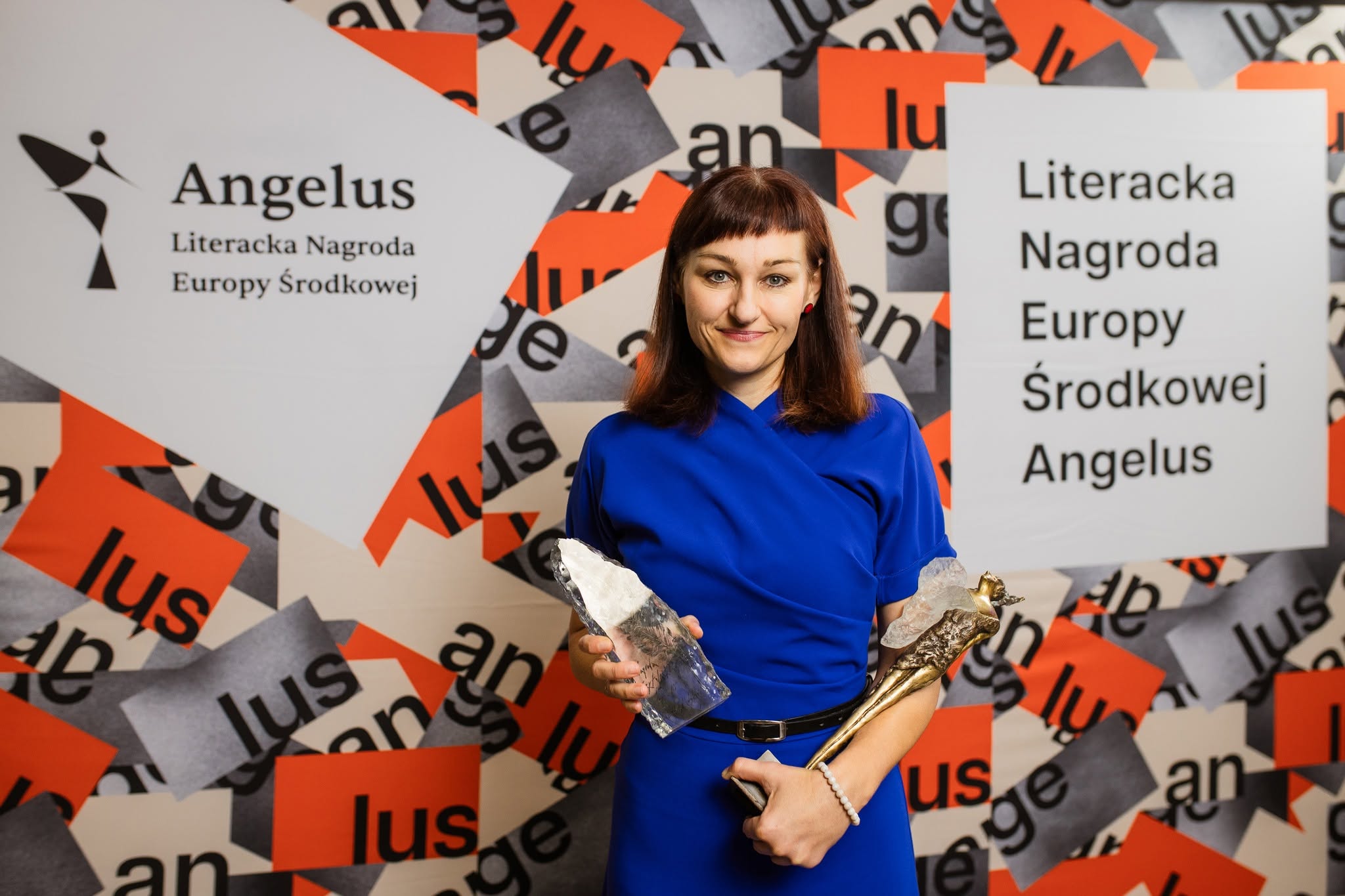
Photo: ©Max Pflegel
The Angelus Award is an annual Polish literary award established in 2006. It recognizes outstanding prose by living authors from Central Europe, published or translated into Polish, which deals with contemporary issues and promotes cultural understanding.
In the Czech Republic, Bílá Voda has won the 2022 State Prize for Literature, first place in the fiction category of the Deník N Book of the Year poll, the Lidové noviny Book of the Year 2022 title, and the 2022 Czech Bestseller Award in the Czech fiction for adults category.
Kateřina Tučková’s books have been translated into twenty-five languages. Her novels Gerta / Vyhnání Gerty Schnirch (2009) – dealing with the Brno death march – and The Last Goddess / Žítkovské bohyně (2012) – exploring the fate of traditional female healers from the Moravské Kopanice region – both won the prestigious Magnesia Litera Award. Recognition of their civic commitment also earned her the Award for Freedom, Democracy, and Human Rights, presented by the Institute for the Study of Totalitarian Regimes in 2017. This year, Gerta was also adapted for the screen.
(Source: Kamila Pírková, Kateřina Tučková získala státní vyznamenání za zásluhy v oblasti umění, slightly amended, translated by Melvyn Clarke)
2. 11. 2026
